


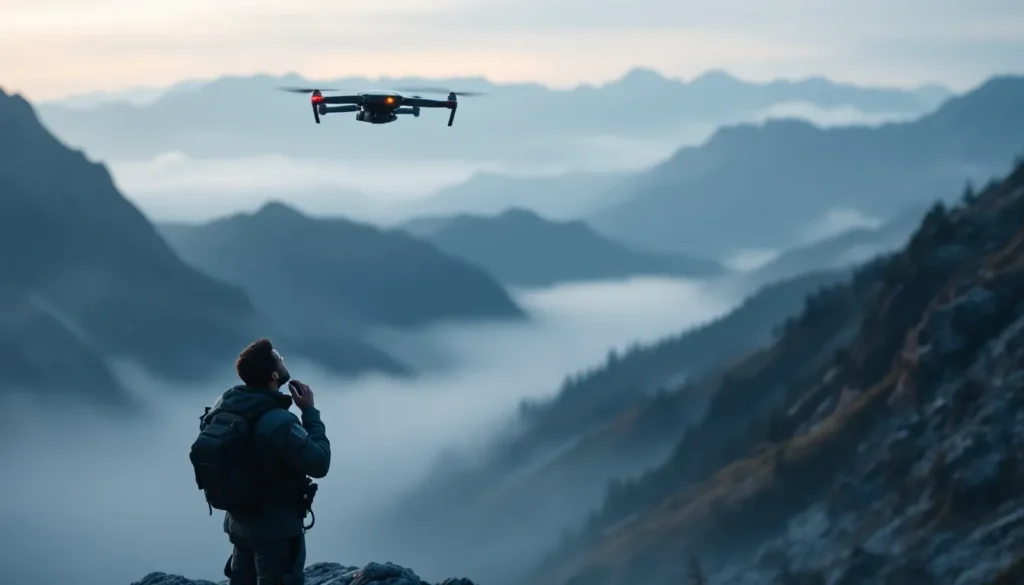
UAS Search and Rescue Operations
Put drones to work where it matters most — finding people faster and keeping responders safer.
A specialist operational stream of the Apexis UAS Capability Development Programme — emergency response, aerial search, reconnaissance and response support.
For responders, UAS pilots and emergency operations personnel: widen situational awareness, locate persons of interest and support incident command while teams stay back from danger.
Pathway levelSpecialist stream
DeliveryClassroom, practical & hands-on UAS
AppliedScenario & simulation exercises
CredentialApexis certificate of completion
Blended delivery — structured classroom and theoretical instruction · applied practical exercises · hands-on UAS operational activities · scenario-based learning · simulation exercises through the Apexis Simulation Centre.
Walk out able to actually help.
Define the search problem and build sortie plans that account for airspace, environment, endurance and multi-aircraft operations.
Apply core aerial, linear, feature-based and complex-environment search patterns to cover ground methodically.
Use visual, optical, thermal and infrared payloads to detect, mark and hand off targets of interest.
Manage dynamic risk, airspace and personnel hazards, and system contingencies throughout a live mission.
Built around the moment it matters.
UAS in Search and Rescue: Foundations
How UAS support SAR operations, integrate with incident command, and the team roles and aviation safety that underpin every flight.
Mission Planning for SAR Sorties
Defining the search problem and weighing environmental, airspace, risk, endurance and multi-aircraft factors before you launch.
Search Techniques and Patterns
Core aerial search patterns alongside linear, feature-based and complex-environment techniques for thorough coverage.
Sensors and Payloads
Getting the most from visual, optical, thermal and infrared imaging, and how to locate and mark targets.
Operational Skills: Mapping, Coordinates, and Records
Working with location and coordinates, and communicating and documenting your findings clearly.
Operational Safety and Dynamic Risk
Recognising airspace, personnel, environmental and physical hazards, and managing systems and contingencies as conditions change.
Mission Scenarios and Applied Practice
Applied terrain, natural-disaster, hazard and marine scenarios — recreatable at the Apexis Simulation Centre — ending in a full simulated SAR mission.
Where this learning adds value.
Build practical capability you can apply immediately, and evidence of structured professional development.
Every programme sits on a pathway, so you can progress from foundation into the specialist streams your role or sector demands.
Contractors and suppliers are routinely asked to evidence trained personnel — structured training supports that case where the course is relevant.
Digital credentials can be independently verified online by employers and credential reviewers. Recognition requirements may vary by employer, jurisdiction, profession and certification type.
A certificate that carries weight.
Apexis Certificate of Completion
Issued by Apexis Risk Innovation Group on successful completion of the programme requirements. Where digital verification is enabled, employers can verify the credential record online.


Apexis Risk Innovation Group is an authorised TEEX Cooperative Learning Center. Selected Texas A&M Engineering Extension Service (TEEX) programmes delivered through Apexis are clearly identified by course name and code.
Who you learn it from matters.
Selected TEEX programmes are available through Apexis Risk Innovation Group, an authorised Texas A&M Engineering Extension Service (TEEX) Cooperative Learning Center, and are clearly identified by course name and code.
Programmes are designed by people who have done the job, around real workplace needs rather than textbook abstractions.
Content is contextualised to the operating environments our clients actually work in — energy, industrial, public safety and emergency response.
Every programme identifies who issues the credential, what it represents and how it can be verified.
Ready when you are.
- Structured classroom and theoretical instruction
- Applied practical exercises
- Hands-on UAS operational activities
- Scenario-based learning
- Simulation exercises through the Apexis Simulation Centre
- Search-pattern, mission-planning and sensor/payload frameworks
- Full simulated SAR mission exercise
- Apexis certificate of completion